
Category: Photographer Education

22 Sep

How to book more clients as a photographer

Every photographer knows the season where the calendar sits empty and you catch yourself wondering how to book more clients as a photographer. Eleven years in, I still remember it vividly — so consider this less a listicle and more field notes from someone who found the way through.

My first booking was a friend’s matric farewell. My second was another friend’s matric farewell. Then: silence. I was still finishing school, and my marketing was non-existent — which turned out to be the entire problem, and the first lesson.

1. Take your marketing seriously before anyone takes you seriously

We work in an era where one published post can reach thousands of people. Use that. The fear is real — other photographers judging your pricing, your marketing, your work not feeling ready. Post anyway. The photographers whose opinions worry you are not the ones who will book you; your future clients are, and they cannot hire someone they have never seen.

Facebook

A business page costs nothing and legitimises you immediately. Keep it current — an abandoned page reads worse than no page at all. Mine lives here if you want a reference point.

Book more clients as a photographer

Instagram

Everyone loves the platform and everyone fights the algorithm — me included. What has held up: post consistently, link your account to your Facebook page so you can read your insights properly, and treat engagement as a two-way practice. Instagram rewards photographers who behave like members of a community rather than broadcasters.

Pinterest

If you run a website with a journal or blog, Pinterest quietly becomes one of your best referral engines. Design a clean, titled graphic for each post and pin it — the search lifespan of a pin is measured in months, not hours.

Make it beautiful

Nobody reads a wall of text about your business. Canva will carry you a long way for story icons, promotion posters and announcements — and if you already know Photoshop or InDesign, better still. One image should summarise whatever you are marketing.

Use the network you already have

Friends, family, colleagues, old classmates — your first marketing department works for free. When they share your work, their trust in you travels with it, and bookings genuinely follow.

Book more clients as a photographer

Have a portfolio, even a humble one

People need proof that you photograph things. A website is ideal, but a well-kept Instagram or Facebook gallery is a portfolio too. Starting from zero? Offer friends and family a free session in the genre you want to shoot, and build from there. Everyone’s first portfolio is borrowed generosity.

2. Collaborate

Find the other creatives building portfolios of their own — makeup artists, stylists, models, florists, venues. Styled collaborations cost little, teach you production, and put your work in front of every collaborator’s audience at once. Some of my longest-standing professional relationships started exactly this way.

3. Second shoot, or find a mentor

If you want the genre, apprentice yourself to it. Second shooting for an established wedding photographer pays you to learn the entire trade from the inside. If weddings are not your thing, find someone in your area shooting what you want to shoot and ask to shadow them — most photographers remember being asked, because most of us once did the asking.

4. Be patient

Bookings do not arrive overnight. It took me nearly three years to reach consistent bookings, and the honest arithmetic of this industry is a long run of no before the yes. Let the no’s be data, not verdicts.

5. Make yourself known

Brand yourself without apology. Your town, suburb or city should know there is a photographer in it. Set the business as your workplace, share the work on your personal profile, and when someone asks what you do, say it plainly: you are a photographer. The industry is saturated with people who whisper it. Say it like you mean it — and then let the work back you up.

The takeaway: consistency is how you book more clients as a photographer

That is the whole secret, unglamorous as it sounds: to book more clients as a photographer, market consistently, collaborate generously, learn relentlessly and stay patient while the compounding happens. If you would like to see where those three slow years eventually led, my portrait portfolio is the receipt — and if you are a client rather than a photographer, the booking page is open.
22 Sep

Photography 101 – my tips and tricks

Photography 101 – notes from the field

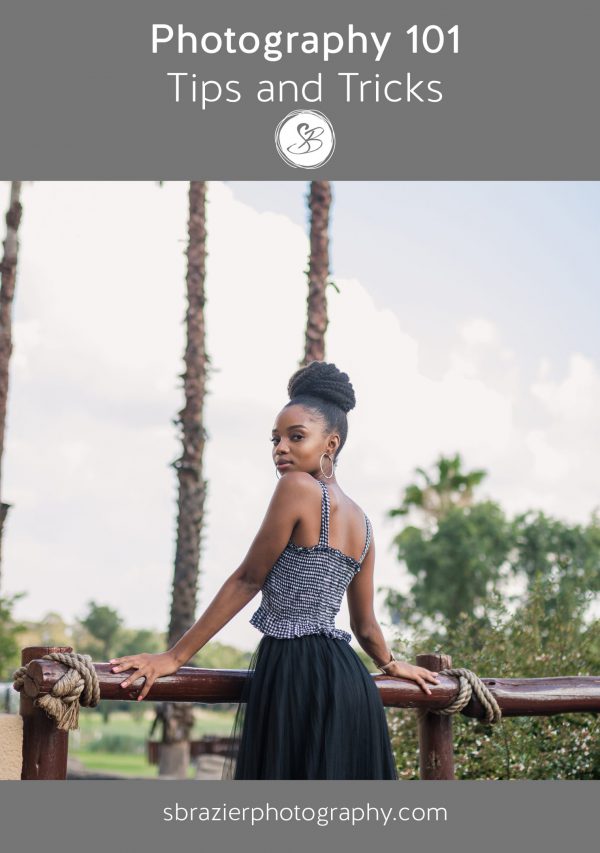
Consider this my photography 101 — eleven years of shooting, distilled into the notes I actually still use. Camera craft, editing, working with the person in front of your lens, and the unglamorous details that separate a hobby from a practice. No fluff; just what has held up.

Your camera

  • Learn manual early, and properly. It becomes instinct — these days I can read the weather and know roughly where my ISO needs to sit before the camera is out of the bag (check anyway). Manual gives you authorship over light, depth of field and the exact moment worth keeping. Nothing else does.
  • Spot metering has been my default for years. Meter for the face, let the rest of the frame fall where the story needs it.
  • Learn your Kelvin white balance. Auto white balance is competent, but dialling Kelvin by hand — higher for warmth, lower for cool — is how you keep a consistent palette across an entire shoot instead of fixing it frame by frame in the edit.
  • Let go of manual focus for sessions. Perfect it for the tricky, deliberate shots — but when a client is mid-laugh, autofocus wins. Speed in the moment matters more than purism.

Editing

Lightroom

Lightroom is where the edit begins: batch processing keeps an entire gallery coherent, which matters more than any single spectacular frame. My workflow runs Lightroom first, Photoshop second — and because a Photoshop pass is saved alongside the original Lightroom edit, I can compare the two and catch myself when I have over-worked an image. The restraint is the skill.

Photoshop

If you photograph people, learn Photoshop properly. I started in January 2018; within a year it had changed what I could deliver — removing a stray sign or a piece of litter is table stakes, but the real craft is subtler than that.

Learn to dodge and burn. Study where natural shadow falls on a face — the way a makeup artist studies contouring — and your retouching stops looking like retouching. It is the single technique that most separates a flat edit from a finished one.

Presets

Do not buy presets. Build your own. Your edit is your signature — it should come from your taste, developed frame by frame, not from a template a thousand other photographers also bought. It takes longer. It is worth it.

On set: directing people, not posing them

Music changes a session. A small portable speaker and a few considered playlists will do more for your portraits than a new lens — empowering, main-character energy for individual sessions; something slower and romantic when photographing couples.

Then direct with intention: ask a couple to dance and let them forget you are there; tell your subject she is the lead in the music video. It sounds simple. It works every time, because people photograph best when they stop performing.

And talk to people like a host, not a technician. How did you meet? Where are you from? What is your story? Offer your own in return. Presence in front of a camera starts with comfort, and comfort starts with you.

Delivering images

After years of cycling through CDs, Google Drive and Dropbox, I settled on Pixieset — elegant client galleries that present the work the way it deserves to be seen, with delivery, favourites and downloads handled cleanly. How your images arrive is part of the experience you are selling.

Pricing and packages

Early in my career I worked in a university town, and it taught me a lasting lesson about pricing: meet your market without cheapening your craft. Shorter sessions at accessible prices — thirty focused minutes instead of a discounted hour — let me serve clients who could not reach my full rate, without ever putting my standard on sale.

On structuring packages: offer three. The first is the essentials. The second is where the value clearly lives. The third is priced noticeably above it. Most clients choose the middle — which is exactly the one you designed them to choose.

Social media

Choose your photography communities carefully. Constructive criticism builds you; comment-section bravado does not. Scope a group before you post your work in it — protect your creative confidence the way you would protect your gear.

And use the free education that exists in absurd abundance: Julia Trotti, Sorelle Amore, Jessica Kobeissi, Peter McKinnon and Mango Street taught me more than most paid courses would have.

There are more social media and marketing notes in this post.

Keep shooting,
Siobhan

Photography 101

That’s my Photography 101, in a nutshell

This photography 101 is what I wish someone had handed me at the start — the camera settings, the editing workflow and the client-facing details nobody mentions until you learn them the hard way. If you would like to see where eleven years of these notes lead, my portrait portfolio is the honest answer — and if you are a fellow photographer, take what is useful and make it your own.

Looking for something? Pop us an email!